Posts

Showing posts from July, 2023

Pattern Overload (And Why We Love It)

hprscript: Multi-Pattern Search Without Running grep N Times Why I built it Like many other programmers, I use AI agents for code development. A lot of the work is supervising what the agent does - reading its plans, checking its diffs, and sanity-checking the code it touches. That means a lot of grep commands, run one after another, often against the same tree. At some point I started thinking this was wasteful. Each grep invocation re-reads the files, re-compiles its pattern, and pays its own startup cost. And when an AI agent is the one driving, every separate search also re-sends the surrounding context to the model - the same conversation, the same instructions, the same tool schemas - just to ask one more question of the same codebase. Ten searches mean ten round trips, ten context replays, ten walks over the data. I knew there was a library that could match many patterns at once: Intel's Hyperscan . It compiles N regexes into a single DFA and matches them all ...
"Life", "Death" and "The Winner Takes It All"

Image
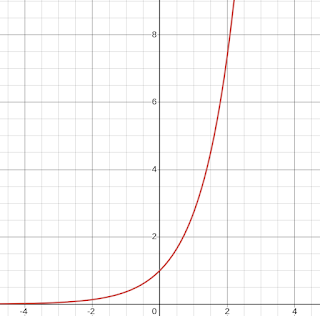
I want to talk about how one simple differential equation became very useful mathematical model that reflect how different ecosystems (both in nature and in technology) evolve. "Life" One of most known ecosystems used for mathematical modeling is population of rabbits. We assume that next generation of rabbits will have all already living rabbits plus new born rabbits. Number of new born rabbits is proportional to number of existing rabbits. We'll take simplest case when number of additional rabbits equal to number of existing rabbits (when 2 rabbits bring 2 new rabbits). This means that change of number of rabbits equal to number of rabbits, or as differential equation: \begin{equation} \large{}\color{blue}\frac{d x}{d t} = x \end{equation} General solution for this differential equation is: \begin{equation} \Large{}\color{blue} x = e^t \end{equation}(where X is population number, T is time). This equation is known as " exponential function ". Many times thi...